Finish Grading and Lawn Seeding Prep Around a Rural Home
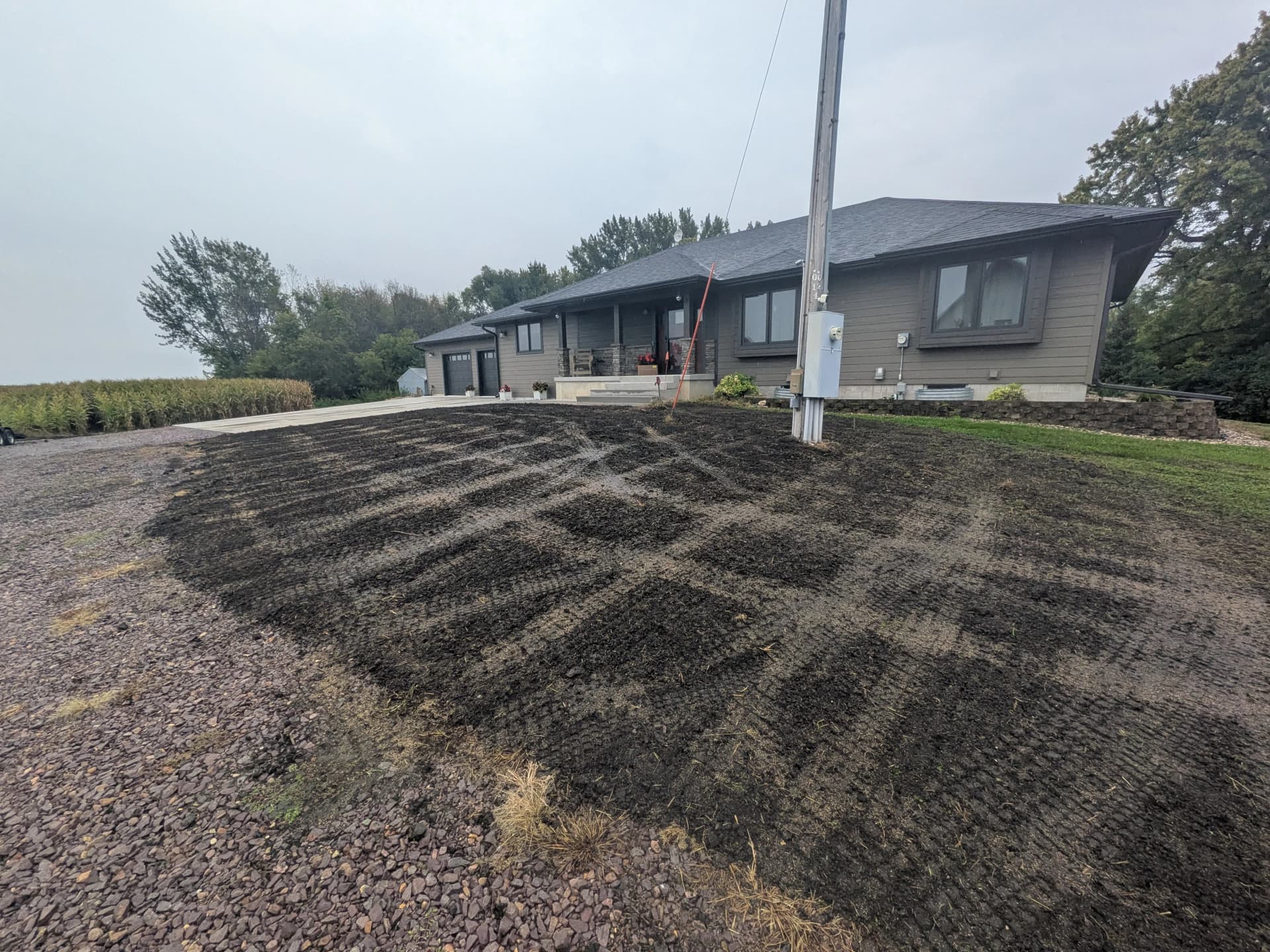
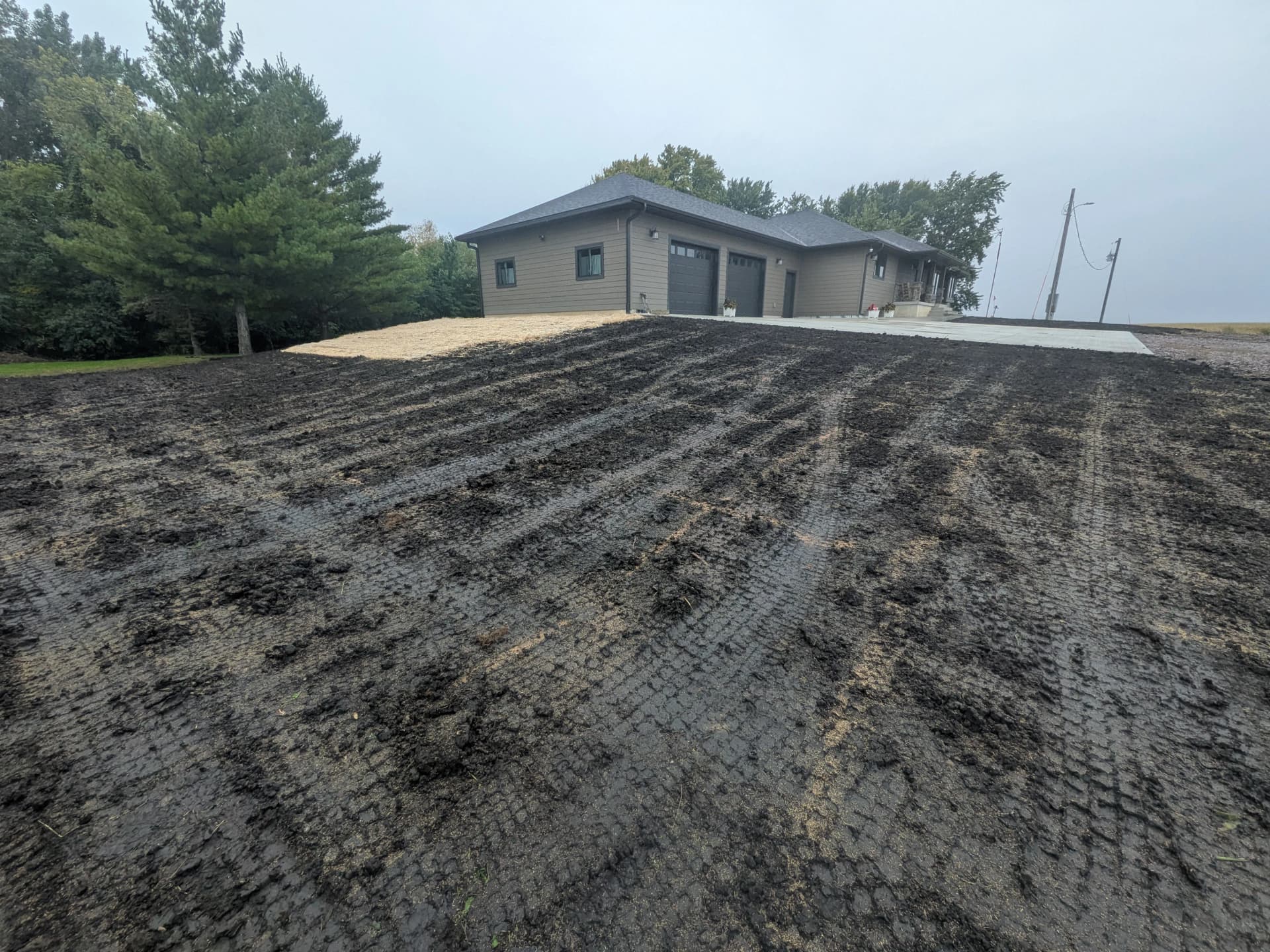
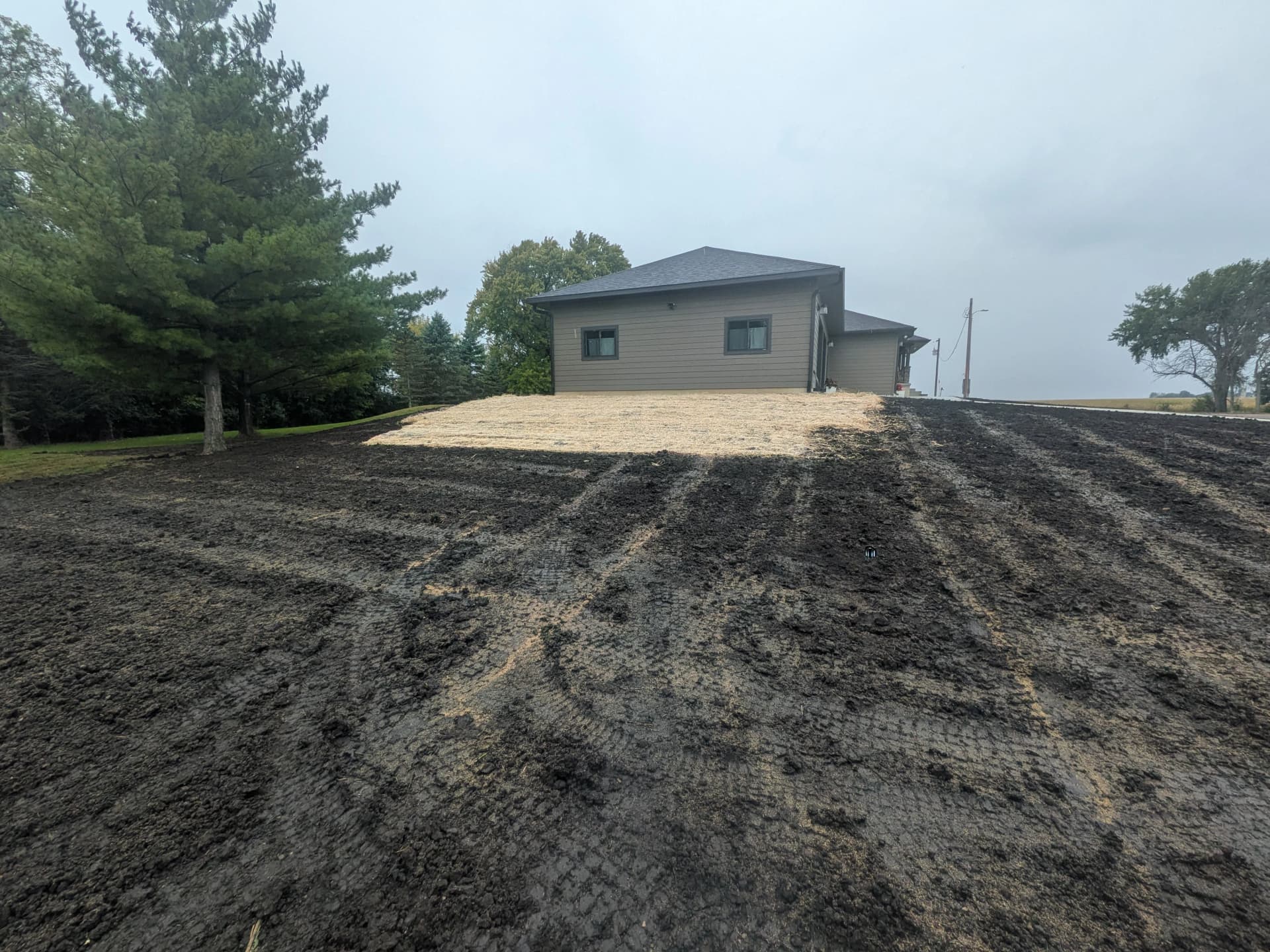
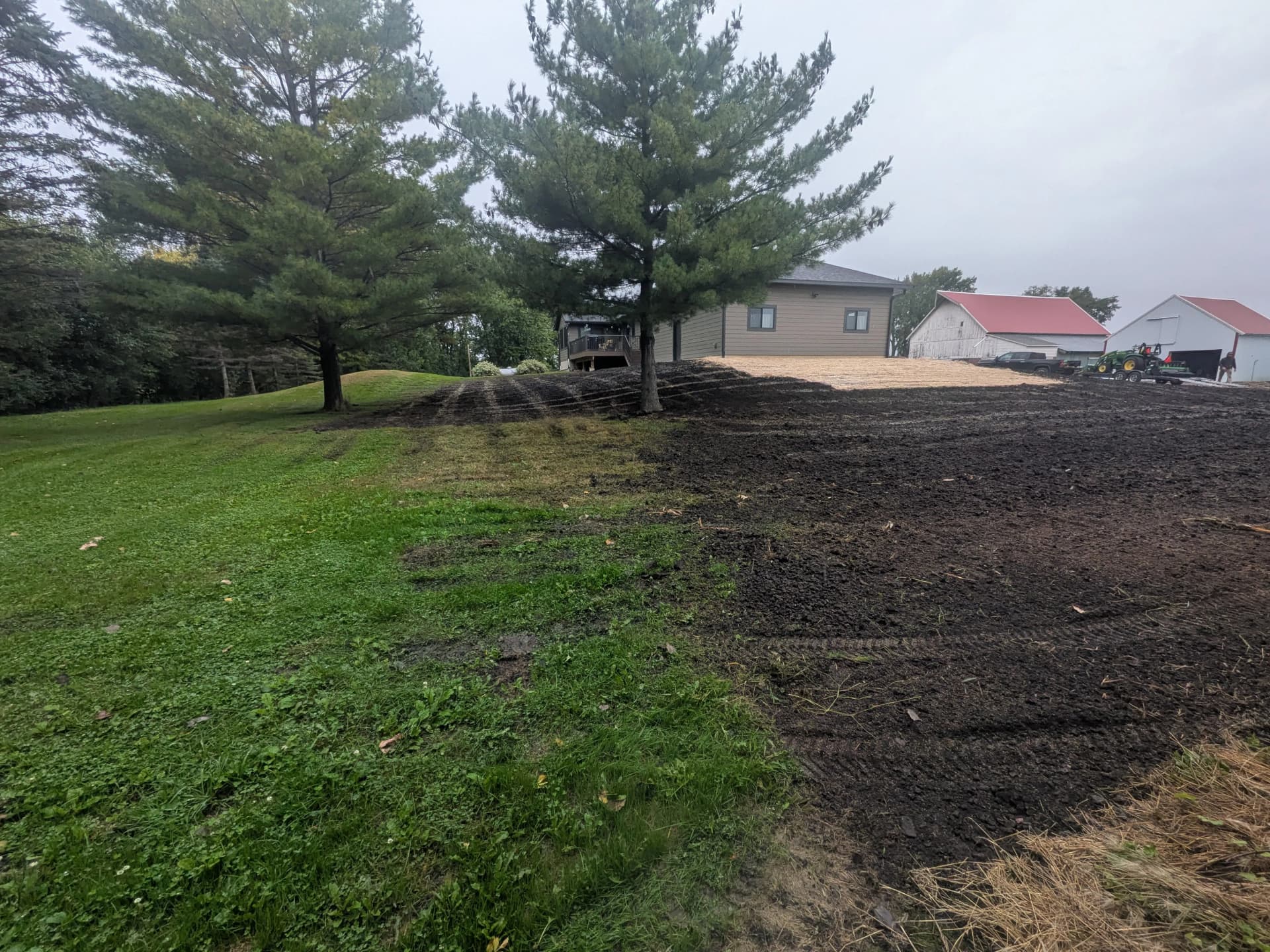
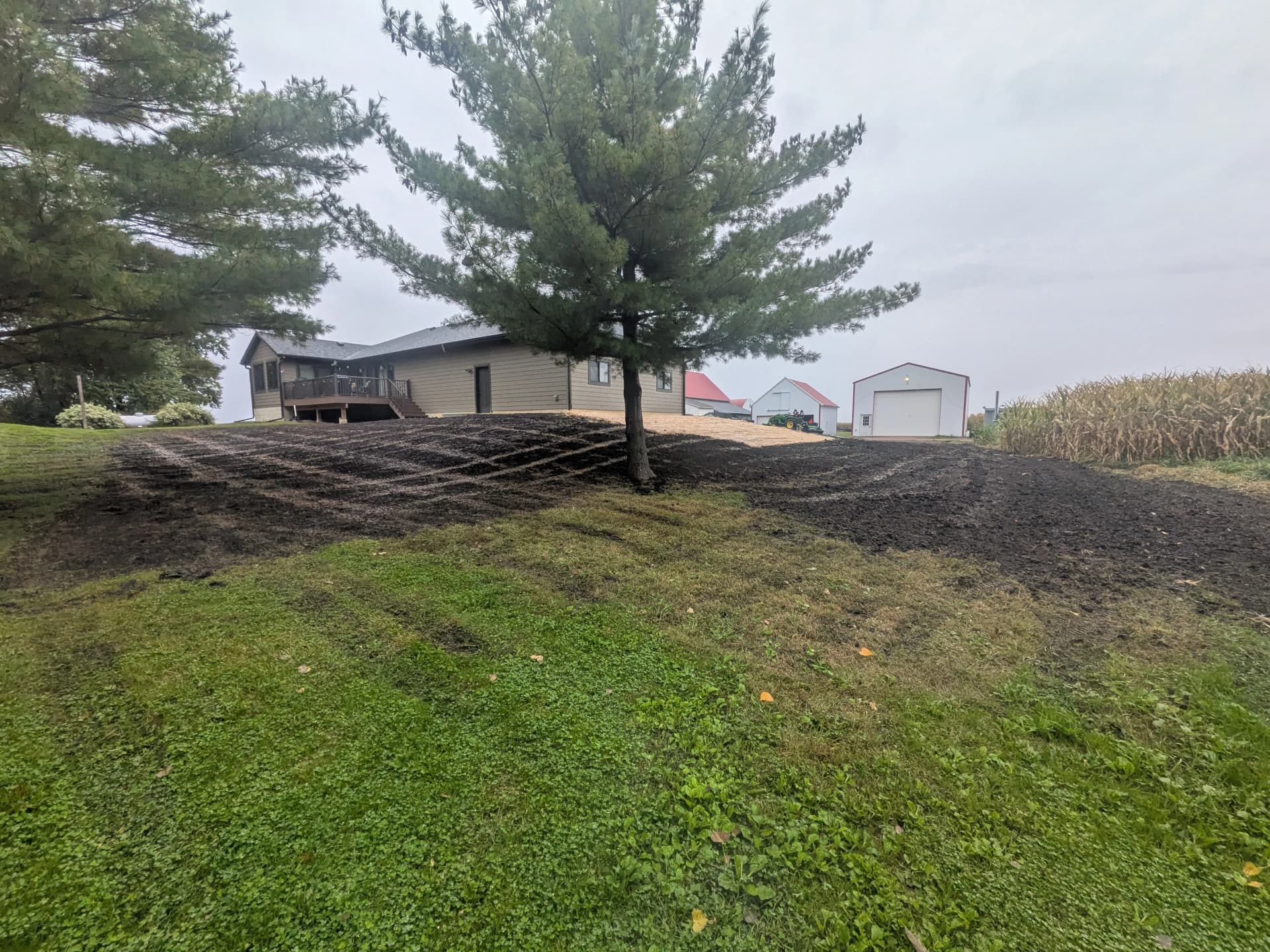
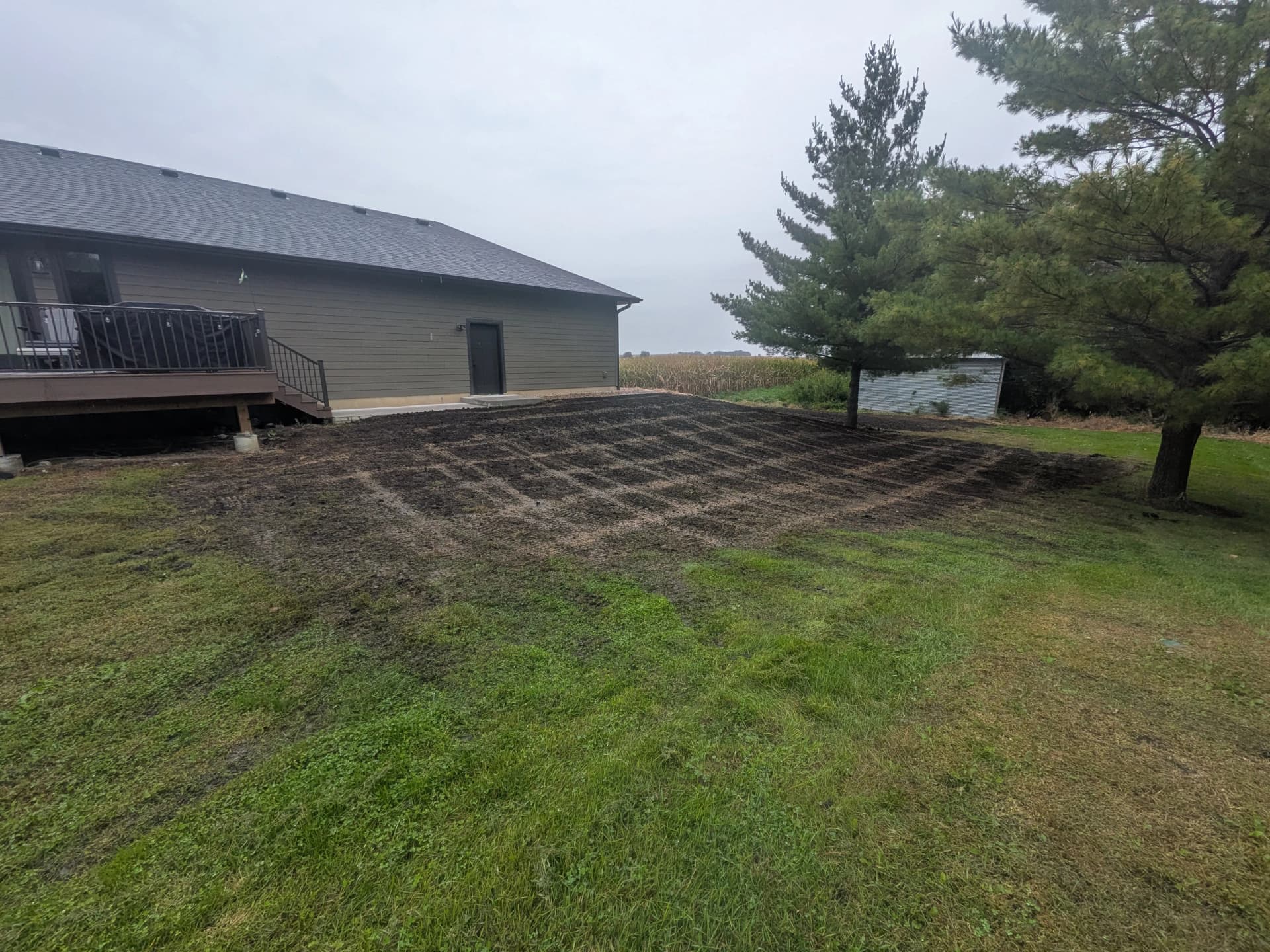
This was day three on a finish grading job, and we wrapped things up just ahead of some incoming rain - which honestly couldn't have been timed better. The whole yard around this home needed to be shaped up before we could even think about putting seed down. Uneven ground, poor slope, compacted soil - none of that gives new grass a fair shot.
Finish grading is one of those steps people skip or rush, and it almost always causes problems down the road. Water pooling near the foundation. Low spots that stay muddy. Thin or patchy grass that never fills in right. Getting the grade correct before seeding means the yard sheds water the way it should, which protects both the lawn and the home itself.
We worked the entire yard - front, sides, and back - making sure the soil was properly shaped and prepped before anything else happened. Sections that were already seeded got a straw cover laid down to protect the seed bed. The rest of the ground was tilled and graded smooth, giving us a solid base to seed into.
Once the grading was dialed in, the soil was ready to receive seed. That kind of thorough soil preparation is what separates a lawn that actually fills in from one that looks patchy and uneven a year later. Fall is a great time for this work - cooler temps and seasonal rain help new seed establish without the stress of summer heat.
If your yard is uneven, drains poorly, or you've got bare areas that need a fresh start, getting the grade right first is the move. Skipping that step and going straight to seed is just setting yourself up to do it all over again.